
Editorial: Learning Photography on Film (Before Digital Existed) and How It Informs the Way I Shoot Digitally Today
Normally these monthly roundups feature my five favorite shoots from that month, however I'm taking a break from shooting to recover from surgery for about 2 months, so I figured this time would be the perfect excuse to dig back through the archives from this year, and finally share some assignments that deserved a post at the time but never got one. And also maybe injecting an editorial opinion or two since I’m more or less stuck in bed for the time being. All that being said…here is my first “article” that I have ever written for this blog that isn’t about my recent shoots :)
I started learning photography on film back in high school, because digital photography simply didn't exist yet (yes, I realize I might be dating myself here!). By the time digital cameras started becoming A Thing, I was already done with college (having gotten 2 degrees in 3 years, kind of a go-getter), and had spent years learning photography the “old-fashioned” way: buy (or steal) film, put it in the camera (a fully manual Canon AE-1), take 24-36 pictures, develop said film in the pitch-black darkness using only your hands to guide you, run it through the enlarger, expose the prints, develop the prints in the chemicals, and then wait to find out how many of them you screwed up (or came out lovelier than expected!). This is not to say “this is how everyone did it back then,” but it was if you were studying it with any level of seriousness. What was more common was plonking the film into a “user friendly” point-and-shoot, taking it to the lab, and crossing your fingers until you picked up the prints.
Millennials are kind of in this weird “sweet spot” when it comes to technology: in the sense that before everything became digital, analog was the only way, and we learned how to do everything in that way; and then also learned how to do all of those analog things digitally later when it became more accessible. Folks who were older than us were apprehensive and a bit slow to adopt it while we whizzed through it, and the folks who are younger than us are ‘digital natives’ and have none of the older sense of the physical world that everyone who came before them has (and has never let go). It’s an interesting mental space to inhabit: being adept at both while everyone else isn’t.

Nick, circa 1997 (complete with chemical stains haha). Taken on a Canon AE-1, very likely a 50mm lens, unknown film stock, hand developed, hand ‘printed’. And hilariously enough: scanned on a Canon printer in 2026.
Tragically, I don’t have very many of these prints left (and I would wager none of the negatives, but I also have thousands of photos that I have still never digitized in boxes in my closet as well, so who knows!). We never really had any reason to think the technology of the time was going to change so drastically so quickly because prior to that, it never really did; camera technology had been more or less the same for many decades (especially the ones we were taught on, which were probably 20-30 years old by the time they landed in our hands to begin with!).
There are a lot of things people say that shooting film teaches you, and most of them are true. You learn pretty quickly what aperture, shutter speed, and ISO actually do when you can't look at the back of the camera afterward and see whether you got it right. You learn to pay attention to the light before you take the picture. Each frame costs a considerable amount of time, money, and energy from the moment you push the button to the moment the print dries on the line (the time between those two things could take hours, or months!). These are common concepts, and they are not incorrect, but there is more to the story here: sure, taking photos is definitely fun, but the darkroom was magical. It was a respite from the hot Arizona sun in an outdoor school, monastically quiet, smelled kinda weird, and was obviously dark. With no computers, cell phones, or internet at the time, it was an easy place to relax and focus (no pun intended) on one thing, and one thing only.
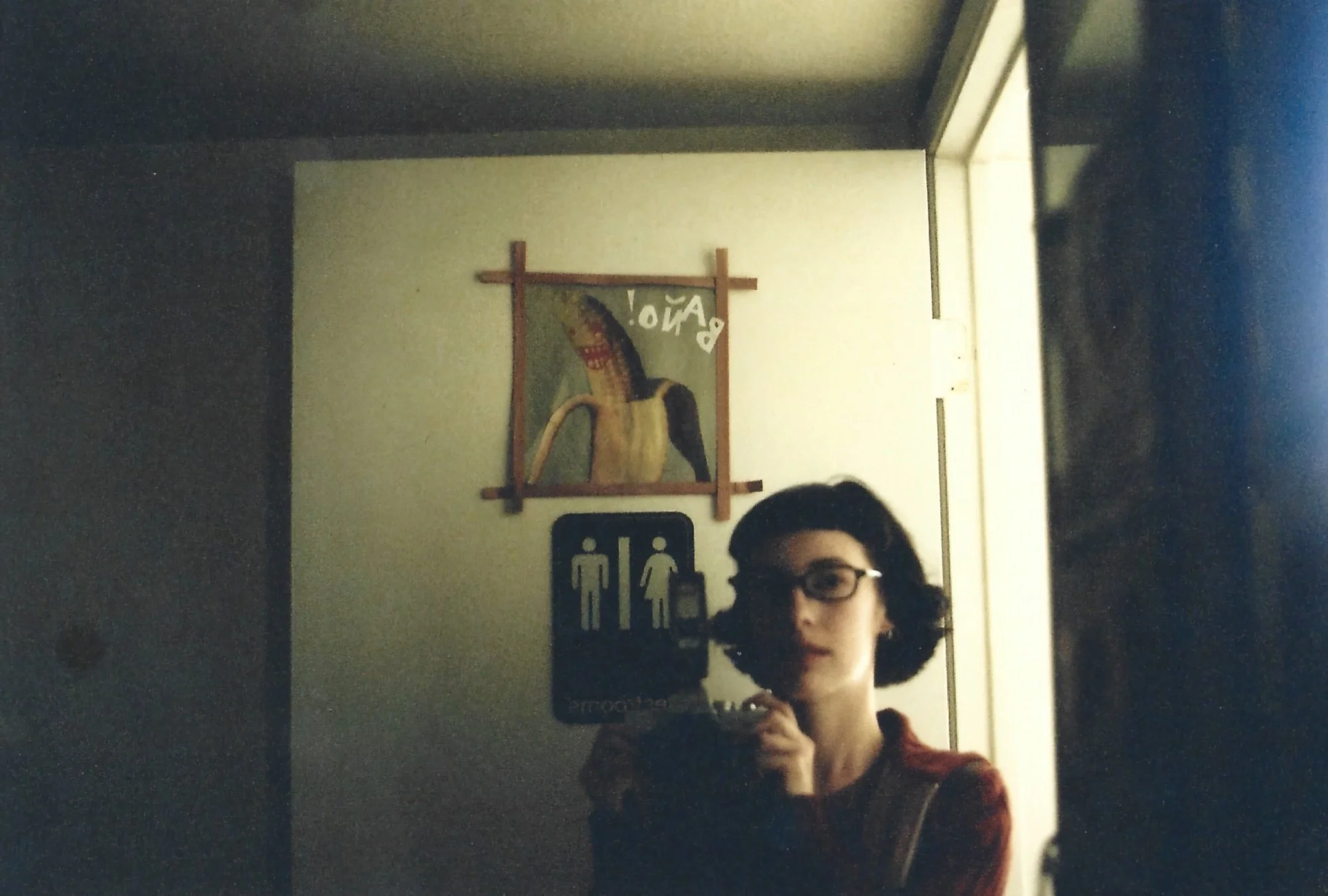
Your captain in 2003 (probably still in college) with said Canon AE-1, though it’s hard to see.
I think the biggest thing I carried over from film, though, is learning to view the world cinematically, composing the shot in your mind’s eye before you even raise the camera (and then in college, storyboarding for motion picture). The stakes were higher, so you obviously had to be more judicious and do far more pre-planning (even as a clumsy 15 year old). I think maybe the biggest difference is that you had to have a shot in mind first, compose it, and then tell the camera what to do (as opposed to allowing the camera to ‘make decisions’ for you, which is definitely more of a modern thing). This has been particularly useful for the kind of photography I do now, which while primarily digital, does still include a not-insignificant amount of film. A lot of my work involves events, parties, weddings, kids, families, and other situations where things are happening quickly and I don't necessarily have the luxury of stopping everything to look at the back of my camera after every shot. I have to know they are good and keep going. Because I do know. Because I was trained (would it be called “classically” at this point?).
Obviously you have to pay attention to what's happening, but more importantly you have to immediately understand the light, the space (color of the walls, height of the ceiling, etc…especially for bouncing flash), know roughly what my camera is going to do (even though it’s almost always in manual mode), and be ready when something interesting occurs.
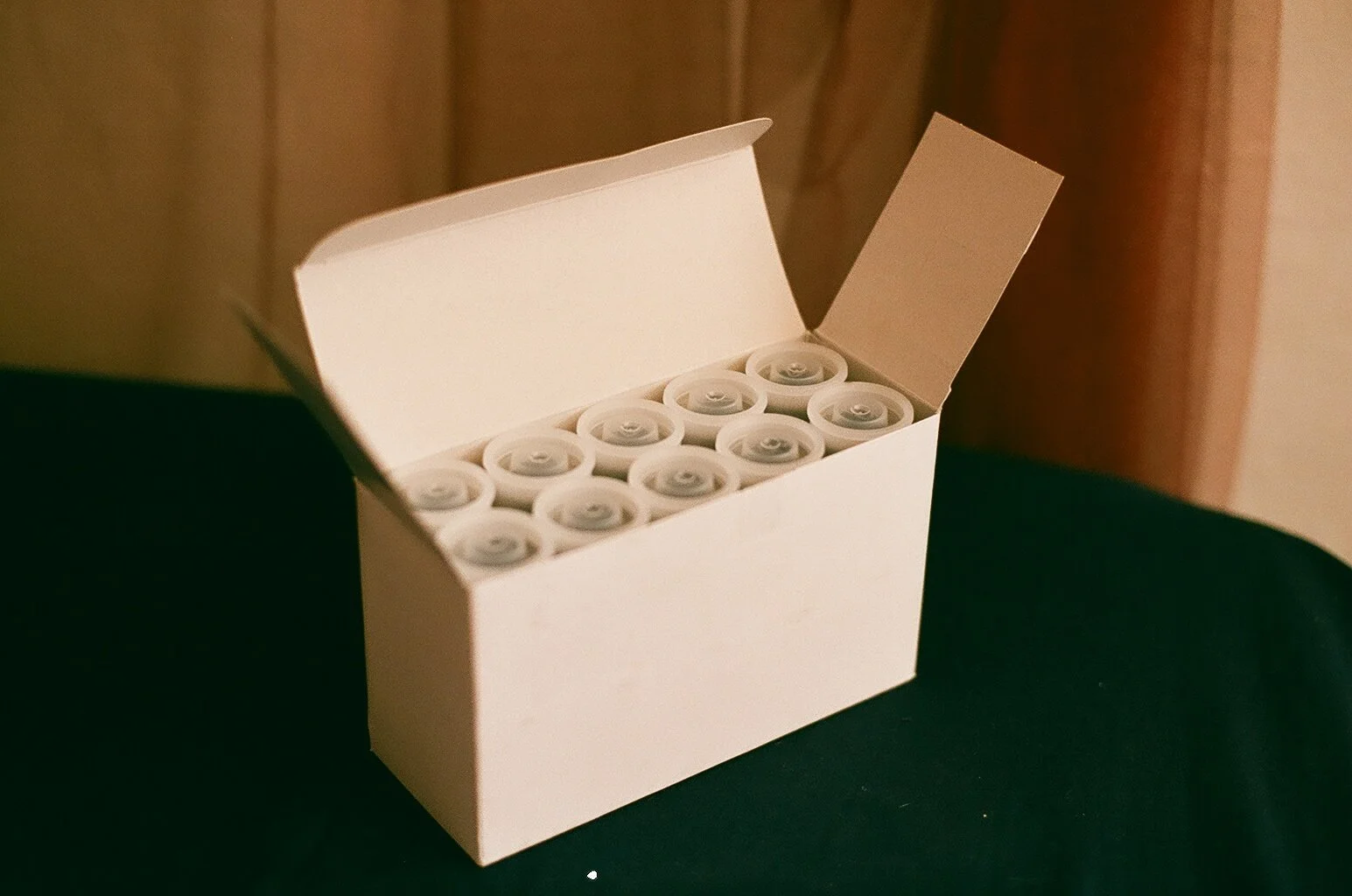
The perks of working in a film lab: free film! Circa 2013, Canon AE-1
Much has been written about the latitude of film vs. a digital sensor and all of the arguments that go along with it regarding which one is “better.” I don’t really think that’s what people are trying to debate, so much as: do the conveniences of digital outweigh the slower, more methodical artistry of film? For my professional work, digital wins most of the time, as today’s clients generally expect a much faster deliverable than they would have gotten 30 years ago. And while I am extremely happy to have wonderful digital cameras that let me shoot in ridiculous lighting conditions, change settings from one frame to the next, take hundreds of photos at an event, and immediately check whether I screwed something up, I am not nostalgic enough to want to go back to waiting days to find out whether I accidentally underexposed an important photograph (with no Photoshop to fix it! Yes, dodging and burning can do a lot, but man).
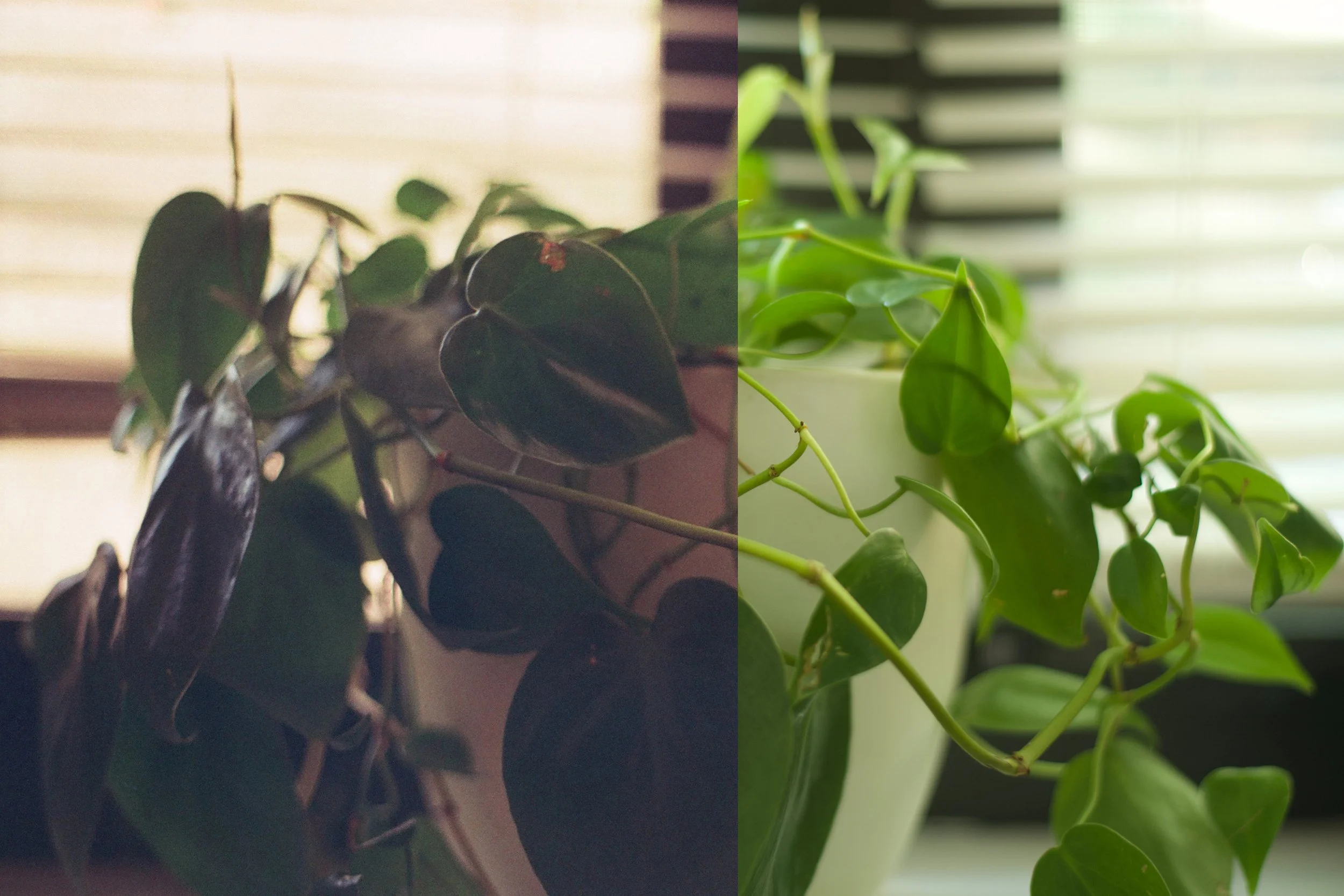
The same object shot with the same settings in the same position in the same light with the same focal length; one is film (Canon Ft-b), and one is digital (Nikon D850). Composited in Photoshop, 2023.
But I will never let go of film, either. You can obviously shoot absolutely anything on film (as people did for over 100 years before digital came around), but when I pick up my digital Nikon today, I'm obviously taking advantage of all the technology it has to offer, but I'm still approaching the photograph with a lot of the same habits I learned when I had 36 exposures, no preview screen, and had to think through the entire process before I decided whether or not it would be worth it to take. This is no longer a consideration with digital, and that is not necessarily a bad thing.
I still shoot film for myself, and I still shoot it for clients. Not because I'm participating in one of the many “film revivals” I have lived through to this point, and not because I think using a film camera automatically makes a photograph more artistic. I shoot it because I know how, because I genuinely like it, and because there are still photographs for which film is simply the right tool. If I had been given the choice when I started learning photography, I would have chosen film anyway. I just happened to learn it at a time when that wasn't really a choice.
I don't miss having to literally pay for every mistake; but I do, however, still like knowing what I'm doing before I press the button.
Jinnifer Douglass is a full-time freelance photographer based in NYC, shooting for both individuals and brands such as Google, Sotheby’s, Uber, Make Up For Ever, Squarespace, and more! Specializing in portraits, food, and special events, she works to make every piece of your social and website content ‘Insta-worthy’ with high resolution, full-frame DSLR photography and expert Lightroom editing. Interested in chatting? Leave a comment below, or send an email to info@jinyc-photo.com!